Novelty, Intoxication, Memory
Three words in Proust’s notebook, and a question about what makes reality suddenly feel more real.
Among the names, places and hurried impressions in a small notebook from 1908, Marcel Proust pauses over a thought about reality. There are moments, he writes, when we see it “en vrai avec enthousiasme, dépouillée de l’habitude”: truly, with enthusiasm, stripped of habit.
He follows this with three words:
“Nouveauté, ivresse, mémoire.”
Novelty, intoxication, memory.
Commas separate them. None is underlined; none is explained. The note seems to catch an experience Proust recognises before he has settled on a way of describing it.
Habit quietly changes our dealings with the world. A street we walk down every day becomes, above all, a route to somewhere else. We recognise the shopfronts and junctions well enough to pass them while thinking about something entirely different. Familiarity gradually wears away their power to surprise.
Sometimes very little is needed to interrupt that familiarity. An ordinary place, caught in unfamiliar light, suddenly has a presence we had stopped noticing. A voice can do it, or the smell of a room, or something that comes back to us without our having tried to remember.
What makes Proust’s note arresting is the company these experiences keep.
Novelty brings us something for the first time. Memory may return something that has been part of our life for years. Either can take us by surprise. A place we have never visited and a place that suddenly returns to us can, for a moment, escape the familiarity that usually settles over things.
Between the two stands ivresse. “Intoxication” is one way of bringing the word into English, though its range extends to exhilaration, altered sensation and moments of unusual intensity. Proust gives no indication of which he has in mind. He leaves it beside novelty and memory, without explaining what they share beyond the possibility of seeing reality en vrai.
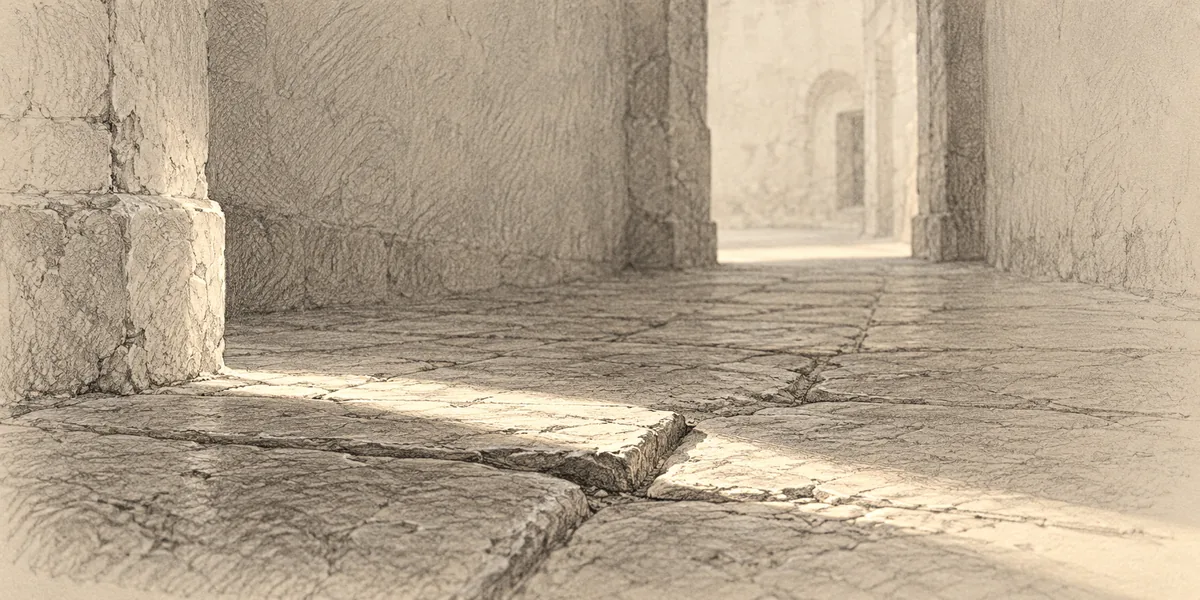
A few pages earlier in the same notebook, he had made a note about Venice. The past seems mediocre to us, he suggests, because we think about it. What we lived through exceeds the diminished account we retain. Something of it may survive in a detail we would hardly think to preserve: the uneven paving stones in the baptistery of Saint Mark’s.
The detail is strikingly physical. Venice might bring to mind light, canals or buildings. Here it comes back through a difference in the level of the stone, felt while walking.
Readers of Time Regained will recognise those stones. In the novel, a similar sensation underfoot will bring Venice back with a force that deliberate recollection could not summon.
In the notebook, impressions, names and ideas are still jostling together. A name can call up an incident; an impression can become a thought. A sensation that seemed isolated can find itself beside experiences with which it had no obvious connection.
Jean-Marc Quaranta has read these pages as placing memory among several kinds of experience that give access to another reality. It is a suggestive reading, provided we keep its scope in view. The manuscript neither assigns equal value to novelty, intoxication and memory nor supplies a finished theory of their relationship.
Meanwhile, in the preparatory writings for Contre Sainte-Beuve, developed during 1908–1909, involuntary memory already has a decisive importance. There is little reason to draw a clean line between an early Proust entertaining many possibilities and a later Proust choosing memory. Thoughts develop alongside one another, sometimes in different directions. A notebook entry need not agree with everything its author is writing elsewhere.
Still, the short list holds our attention, as does the phrase that introduces it: seeing reality en vrai.
Perhaps Proust is trying to describe an intensity of perception, the moment when an ordinary thing seems to acquire a substance it lacked before. But how much reality is there in that sense of things becoming more real? Has the world finally revealed itself as it is, or has something changed in the way we look at it?
The strength of the experience does not settle the question. Novelty can mislead us; intoxication can distort; memory can reconstruct. Yet there are moments when a street, a room or a slab of stone seems to hold far more than we could see in it just before.
On the page from 1908, Proust leaves that ambiguity unresolved. He writes his three words, then moves on to other memories and impressions.
Perhaps their proximity is what draws us back: something we have never seen, something we thought lost, and something that briefly alters our way of inhabiting the present can leave us with a similar sensation.
Proust calls it seeing reality en vrai. What remains uncertain is what, in those moments, has suddenly become so true.
Documentary Note
The principal source is Marcel Proust’s Carnet 1, held at the Bibliothèque nationale de France (NAF 16637), folios 10v and 11v. A digitised facsimile is available on Gallica.
For the transcription and an account of how these notes relate to the development of Proust’s ideas, see Jean-Marc Quaranta, “Le Carnet 1 : éléments d'une genèse des théories proustiennes,” Bulletin d'informations proustiennes, no. 29, 1998, pp. 7–19, available on HAL.
The dating of these folios to autumn 1908 follows Philip Kolb’s editorial work in Le Carnet de 1908 (Gallimard, 1976), as cited by Quaranta. Kolb’s edition has not been consulted in full.
For comparison with the central role of involuntary memory, see the Notes sur l'intelligence in Contre Sainte-Beuve and Le Temps retrouvé (Time Regained). The precise dates of individual preparatory texts for Contre Sainte-Beuve should be distinguished from the chronology of the project as a whole.
Carnet 1 · 10v / 11v
Marcel Proust, Carnet 1, Bibliothèque nationale de France, NAF 16637. The list and the Venetian recollection appear on folios 11v and 10v; Jean-Marc Quaranta’s reading was published in the Bulletin d’informations proustiennes, no. 29 (1998), pp. 7–19.